← Back to Researchers
Researcher Profile

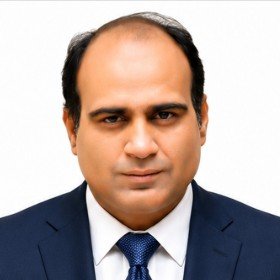
Dr. Tahir Alyas

Associate Professor

Status: Active

Dr. Tahir Alyas

Dr. Tahir Alyas

Associate Professor

Research Interests

Artificial Intelligence, Machine Learning. Deep Learning

Biography

Dr. Tahir Alyas is Director ORIC and Associate Professor of Computer Science at Lahore Garrison University, Pakistan. He holds a PhD in Computer Science and specializes in Artificial Intelligence, Blockchain, Cloud Computing, Cybersecurity, Federated Learning, and Digital Governance. He has published more than 55 research papers in high-impact international journals, including Scientific Reports, IEEE Access, Sensors, and Frontiers. Dr. Alyas has supervised numerous postgraduate research projects and secured several national and international research grants. He serves as a reviewer for leading journals published by IEEE, Springer Nature, MDPI, and Tech Science Press and is a Senior Member of IEEE. His current research focuses on Explainable AI, Large Language Models, Healthcare Informatics, Smart Cities, and Blockchain-enabled digital transformation.

Year-wise Citations

Citations grouped by publication year from OpenAlex.

OpenAlex

Research Impact

OpenAlex metrics connected to the researcher's ORCID iD. Last synced Jun 03, 2026 11:32 PM.

OpenAlex
Total Publications 73
Total Citations 1,373
h-index 23
i10-index 39

Recent Publications

73 publications - Page 8 of 8

OpenAlex
  1. S. Naseem, M. I. Abid, F. Usman, F. Ahmad, A. D. Butt, F. Aas, and T. Alyas, "Genetic Algorithm & Fuzzy Logic Based PEM Fuel Cells Power Conversion System for AC Integration,", International Review of Applied Sciences, 2015, View source.
    0
  2. N. Tabassum and T. Alyas, "Optimized Routing in Cognitive Networks using Ant Colony Algorithm,", Journals & Books Hosting (International Knowledge Sharing Platform), 2015, View source.
    0
    Open Access
  3. T. Alyas, N. Tabassum, S. Naseem, F. Ahmed, and Q. T. Ein, "Learning-Based Routing in Cognitive Networks,", IARS International Research Journal, 2014, doi: 10.51611/iars.irj.v4i2.2014.40.
    3
    Open Access